


-
非洲联盟(African Union)简介
-
集成快速建造开启中非国际新征程
-
跨越东西差异,践行多边主义
-
新华国际时评:战“疫”展现中非兄弟情
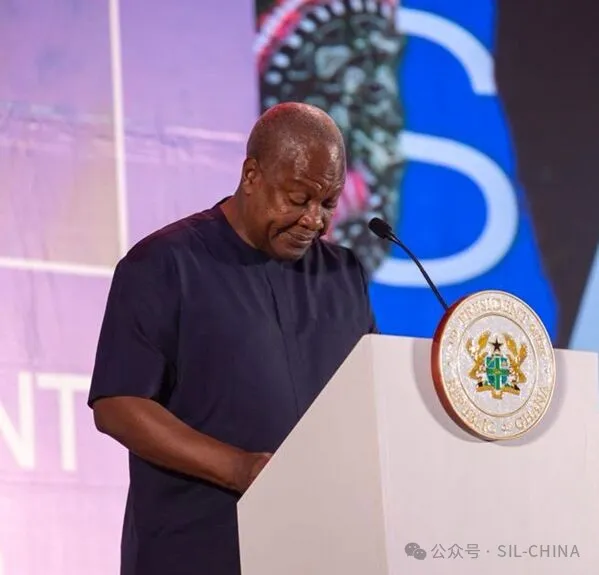
加纳总统 John Dramani Mahama 先生重申其政府致力于推动经济转型 -- 从初级矿产原料出口国升级为全球采掘业价值链中的竞争力参与者。
在塔科拉迪举行的 "2026 本土化峰会" 上,他以 "强化本土化政策 -- 建设加纳韧性矿业" 为主题发表演讲,提出雄心勃勃的发展路线图,旨在深化本土化进程、加速工业化转型,将加纳打造成为技术驱动的矿业中心。此次峰会由矿产资源委员会主办。
总统指出,尽管加纳稳居非洲最大黄金生产国及全球前六大产金国之列,但高端工程、矿物加工、设备制造、技术服务及精炼等高附加值环节仍主要在国外完成。
"我们一直是高产出的生产者,却尚未成为采掘业价值链的全面参与者。"
他呼吁业界反思加纳矿产资源的长期遗产:百年之后,这些资源究竟只会留存于出口数据和特许权使用费记录,还是能成为世界级产业、繁荣的本土企业和韧性矿业社区的基石?
总统援引博茨瓦纳、智利和印尼的经验强调,明智且可执行的前瞻性本土化政策不仅不会阻碍投资,反而能创造可持续竞争力,关键在于把握平衡 -- 政策既要雄心勃勃又要切实可行,既要立场坚定又要注重实效。
总统提出两大转型路径:首先,本土化合作必须从交易型采购升级为变革型伙伴关系。政府正修订矿业法规框架,推动本土企业沿价值链攀升 -- 从消耗品供应商转型为关键部件制造商和创新主体,股权参与、技术转移与知识共享应成为行业常态。
其次,总统严正声明继续出口原矿同时进口成品的行为不可接受,设定了五年内终止原矿出口的目标。他承诺将支持精炼厂、金锭基础设施、矿产创新及产业集群建设,并顺应全球绿色能源转型趋势,推动铝土矿、锰矿和锂矿的下游加工。
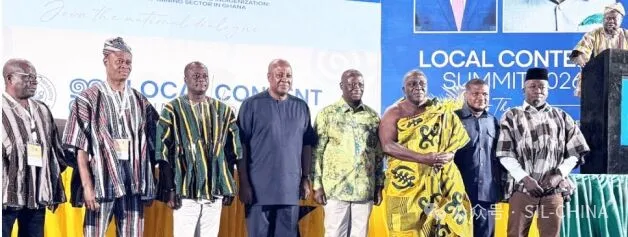
他表示,另一项核心战略应聚焦人力资本开发。政府将强化矿业与技术大学等高校及技术院校的建设,同时扩大与矿业合作的学徒计划,重点培养自动化、机器人技术、无人机应用、数据分析、环境可持续性及可再生能源整合等领域的技能。
总统强调,矿业未来必将由数字技术驱动。他指出加纳必须定位为人工智能勘探、物联网资产管理、区块链供应链透明化及本土研发的创新枢纽,并考虑设立国家矿业创新研究中心以推动转型。
矿业委员会首席执行官 Isaac Andrews Tandoh 先生表示,本次峰会将成为年度平台的开端,旨在集结行业各方实现矿产资源的负责任开发与管理。
Tandoh 先生警告民众勿为外资企业充当代理人损害国家利益:"为何要用自己的名义签署这类协议?擦亮眼睛 -- 你们正在被利用。" 他透露委员会正在制定新的特许权制度,并审查那些常超出政策有效期的长期租约。
西部大区部长 Joseph Nelson 先生指出,峰会恰逢各方构建更具韧性、多元化和包容性区域经济的关键时刻。
他呼吁传统领袖与矿区社区持续维护和平稳定环境,促进矿业可持续发展,并强调本地化内容应从基础参与升级至高价值技术合作 -- 从商品供应转向工程、数字服务与制造领域,从劳力输出转向知识型岗位。
他特别指出强化本地化与打击非法采矿的关联,认为赋能本土企业、规范供应链及确保透明化的本土经营将削弱非法作业动机。
西部大区酋长院主席 Nana Kobina Nketsia 五世呼吁,对加纳矿业进行根本性改革,确保资源财富直接惠及矿区社区。
他强调必须超越空谈,实施以人民为中心的改革,优先保障本土参与和社区发展。在追溯西部大区作为国家黄金生产核心的历史地位时,他列举了塔克瓦、普雷斯特阿等矿业重镇 -- 尽管这些地区为国家财政作出巨大贡献,却仍深陷发展困境。
他敦促各方深化本地化政策,扩大本土所有权,遏制资金外流,并在矿业价值链中构建国内工业能力。
We Must Move Beyond Raw Minerals – President
President John Dramani Mahama has reaffirmed his administration’s commitment to repositioning the economy from a primary exporter of raw minerals to a competitive player across the global extractive value chain.
Speaking at the Local Content Summit 2026, organised by the Minerals Commission in Takoradi on the theme ‘Strengthening local content and indigenisation – building a resilient mining sector in Ghana’, he outlined an ambitious roadmap aimed at deepening local content, accelerating industrialisation and positioning Ghana as a technology-driven mining hub.
He said although Ghana remains Africa’s leading gold producer and ranks among the top-six globally, much of the high-value activity in advanced engineering, processing, equipment manufacturing, technical services and refining still takes place outside the country.
“We’ve been prolific producers, but we have not yet become full participants in the extractive value chain.”
He challenged stakeholders to reflect on the long-term legacy of Ghana’s mineral wealth, asking whether a century from now it will be remembered merely in export statistics and royalty payments or as the foundation for world-class industries, thriving Ghanaian enterprises and resilient mining communities.
Drawing lessons from Botswana, Chile and Indonesia, President Mahama said smart, enforceable and forward-looking local content policies do not deter investment but rather create sustainable competitiveness. The key, he stressed, is balance – policies must be ambitious yet practical; and firm yet performance-based.
First, he said, local content must evolve from transactional procurement to transformational partnerships. Government is reviewing mining legislation and regulatory frameworks to ensure Ghanaian enterprises move up the value chain – from suppliers of consumables to manufacturers of critical components and innovators.
Equity participation, technology transfer and knowledge-sharing, he said, must become standard practice.
Second, he declared it unacceptable for Ghana to continue exporting raw ores while importing finished products – setting a five-year target to eliminate raw ore exports.
He pledged support for refineries, bullion infrastructure, mineral-based innovation and industrial clusters, while promoting downstream processing of bauxite, manganese and lithium in line with the global green energy transition.
Another pillar strategy, he said, should focus on human capital development. Institutions such as the University of Mines and Technology and technical universities will be strengthened, alongside expanded apprenticeship programmes in partnership with the mining industry. Skills in automation, robotics, drone technology, data analytics, environmental sustainability and renewable energy integration will be prioritised.
Also, the President stressed that mining’s future is digital and technology-driven. Ghana, he said, must position itself as a hub for AI-assisted exploration, IoT-enabled asset management, blockchain-based supply chain transparency and locally driven research and development. Government will explore establishing a national mining innovation and research hub to institutionalise this transformation.
Chief Executive-Minerals Commission Isaac Andrews Tandoh said the summit is the beginning of what will become an annual platform to rally all industry players around responsible exploitation and management of mineral resources.
He cautioned Ghanaians against fronting for foreign businesses to the detriment of the country’s interests. “Why do you lend your name to such agreements or arrangements? Open your eyes – you are being used,” he warned.
He announced that the Commission is working on a new royalty regime and reviewing long-term leases which often outlive prevailing policies and regulatory systems.
“We are ready to support Ghanaian businesses, civil society organisations, local communities and other stakeholders to derive tangible benefits from the sector,” he stated.
Western Regional Minister Joseph Nelson said the summit has come at an opportune time as stakeholders work toward building a more resilient, diversified and inclusive regional economy.
He urged traditional authorities and host communities to continue nurturing a peaceful and stable environment that enables sustainable mining operations to thrive.
He stressed that local content must evolve from basic participation to high-value technical engagement – from the supply of goods to engineering, digital services and manufacturing and from labour provision to knowledge-based roles.
He also highlighted the link between strengthening local content and the fight against illegal mining, arguing that empowering local enterprises, formalising supply chains and ensuring transparent indigenisation will reduce incentives which fuel unlawful operations.
“These measures will create lawful and structured participation in the mining sector; the region stands ready to support policies and partnerships that promote capacity building for businesses, transparent procurement frameworks, environmental sustainability, responsible mining practices and strong collaboration between mining companies and host communities.”
President of the Western Regional House of Chiefs, Nana Kobina Nketsia V, called for a fundamental transformation of Ghana’s mining sector to ensure that resource wealth directly benefits host communities.
He emphasised that the time has come to move beyond rhetoric and adopt bold, people-centred reforms which prioritise indigenous participation and community development.
Underscoring the historical significance of Western Region as the backbone of Ghana’s gold production, he cited key mining towns such as Tarkwa, Prestea, Bogoso and Wassa – noting that despite their immense contribution to national revenue, many of these communities continue grappling with underdevelopment.
He urged stakeholders to deepen local content policies, expand indigenous ownership, reduce capital flight and build domestic industrial capacity within the mining value chain.
来源:财经在线
文:By Juliet Aguiar DUGBARTEY, Takoradi
翻译:无尽夏
扫码关注迦纳术略微信公众号,每日更新加纳新闻:

 沪公网安备31010702009233号